A $79 pair of glasses looks like a win at checkout. The problem shows up later: in replacements, in headaches, in lenses you learn to see around instead of through. Here is an honest breakdown of where the money goes in a quality pair, and why the cheap option is usually the expensive one.
The real math of cheap glasses
Budget eyewear is priced for the moment of purchase, not the years after it. Mass-produced frames made from brittle plastics and low-grade metals warp in heat, snap at the hinges, and shed screws within weeks. Most are sold with no fitting at all, so they slide, pinch, and sit crooked from day one.
Run the numbers over time. Replacing a cheap pair every year or so costs more than one well-made pair worn for three to five years, and that is before counting the daily tax of bad optics: off-center lenses, glare, distortion at the edges, and the low-grade eye strain that follows you through every workday. Cheap glasses do not just fail sooner. They perform worse the entire time they last.
What quality frames are made of
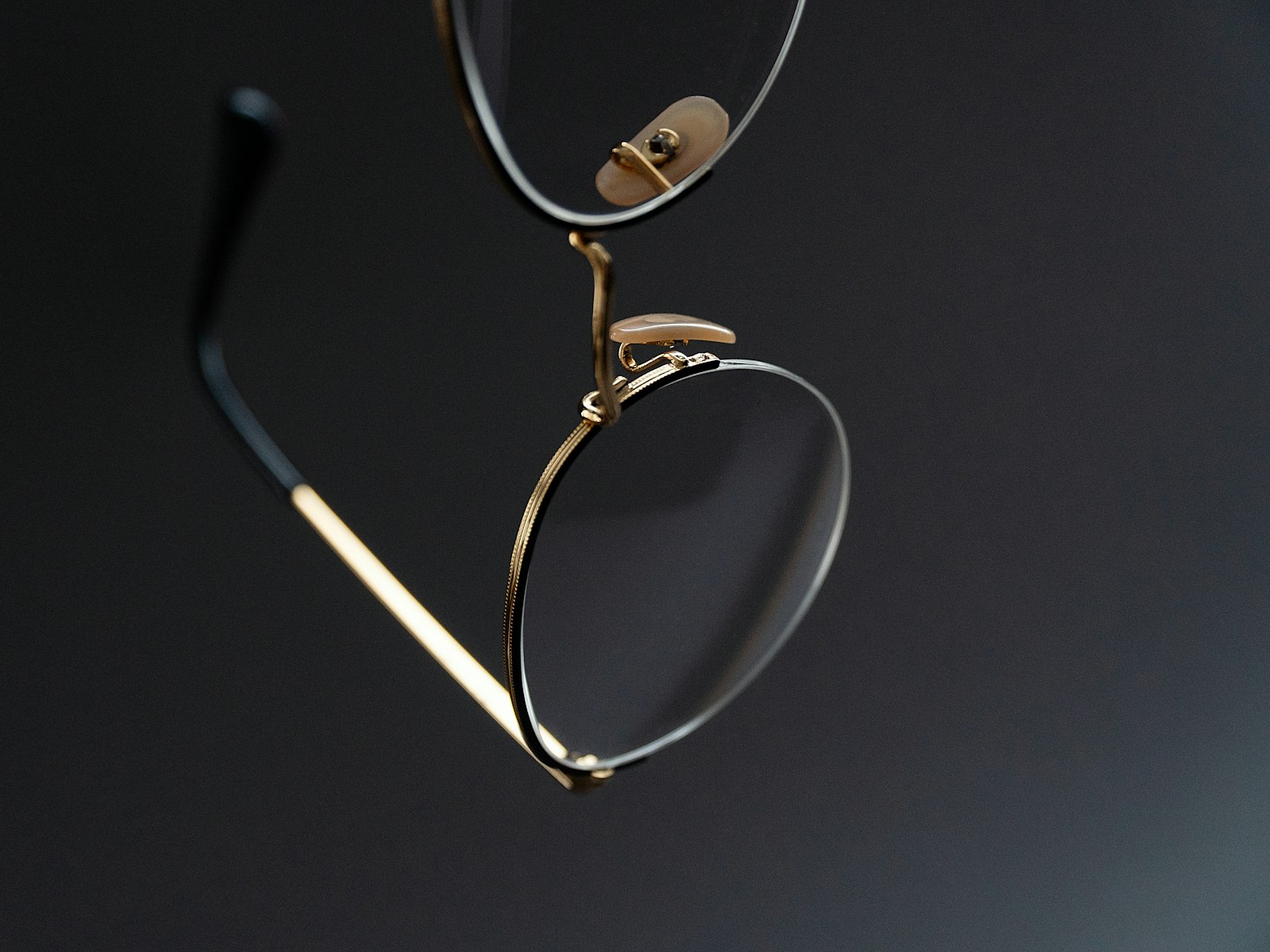
Pick up a well-made frame and the difference is physical. Acetate that is milled from a solid block rather than injection-molded holds its shape, takes adjustment cleanly, and keeps its color and finish for years. Metal frames from serious makers use titanium or surgical-grade steel instead of soft alloys that fatigue and snap.
The hinges tell you the most, because they are the first thing to fail on a cheap frame. Quality hinges are built with real barrels and replaceable screws, made to open and close tens of thousands of times. Then there is finishing: independent workshops tumble, polish, and assemble frames by hand in small runs. The result is a frame that can be serviced and repaired for years instead of replaced on a schedule.
What quality lenses change
The frame gets the compliments, but the lenses are what you actually look through all day. Precision-surfaced lenses are engineered to your exact prescription with minimal distortion, which matters most in progressives, where cheap lenses produce narrow corridors of clarity and a swim effect at the edges. Good coatings are the other half: durable anti-reflective treatment that kills glare from screens and headlights, scratch resistance that holds up to real life, and full UV protection as standard. Our lens options cover everything from single vision to progressives and photochromics, matched to how you actually use your eyes.
The fitting is the hidden value
Here is the part no price tag shows: the same lens in the same frame performs differently on different faces. Accurate pupillary distance, correct segment heights for progressives, and a frame adjusted to sit precisely where the lenses were designed to sit are what turn a good prescription into good vision. We measure and edge lenses in-house at our Union Square shop, and we adjust every pair on the face that will wear it. A quality lens fitted badly performs like a cheap one, which is exactly what happens when the fitting step is skipped by an online checkout.
What it costs, honestly
At Petite Optique, frames start at $399 and single vision lenses at $159, with progressive lenses from $399. That buys milled and hand-finished frames from independent designers, lenses cut in-house to your exact measurements, a fitting done on your face rather than a size chart, and adjustments, most of them free apart from any replacement parts.
Spread across the years a good pair lasts, it usually costs less than the cheap option, and it is better every single day in between. If you want to feel the difference before you believe it, book an appointment and try the collection in person. And when something does go wrong, our repair and adjustment service is in-store.

Written by the Petite Optique team, independent opticians in Union Square since 1995.
Have Questions?
40 Union Square East
Mon–Sat 11am–5pm
Sun 12pm–5pm
Keep Reading


Ready for your next pair?
Book an appointment with our optometrist, or call the shop and we'll help you plan a visit.